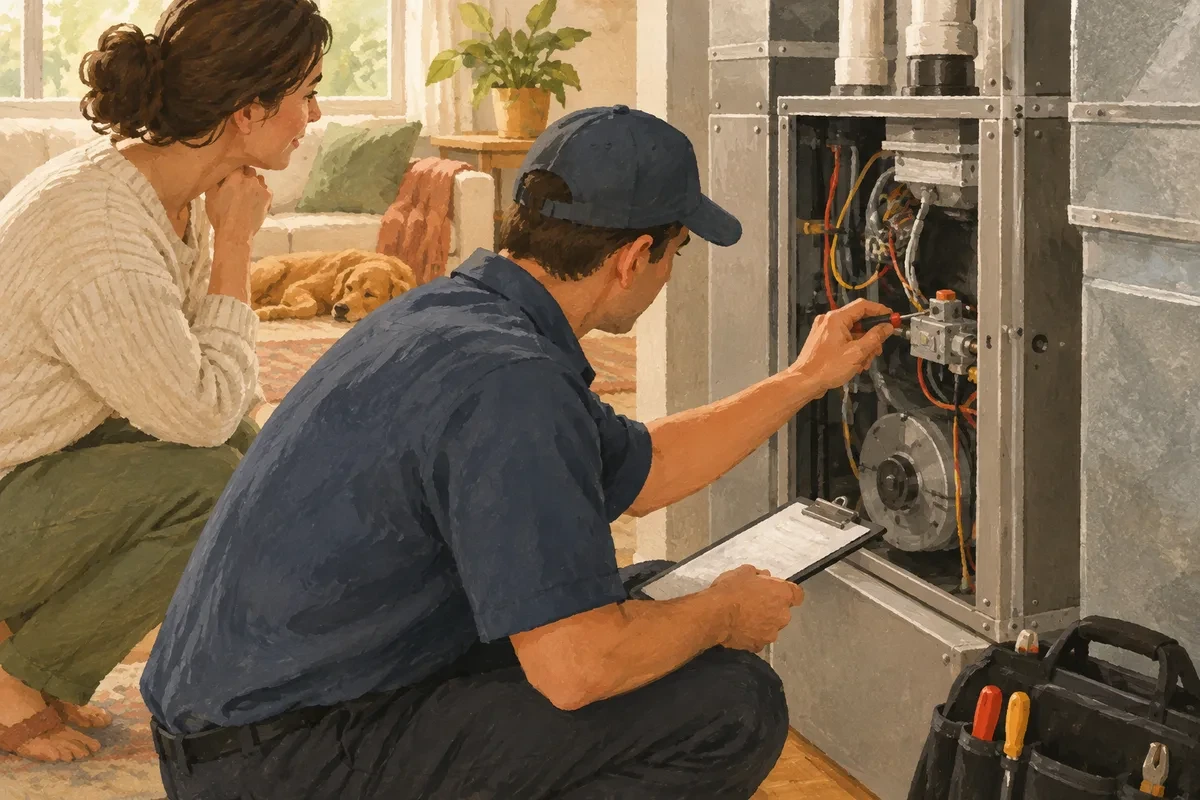
Why Heating and Cooling Systems Need Yearly Tune-Ups
Most people don't think about their heating and cooling system until it stops working. Then, suddenly, it's the only thing on their mind. A yearly tune-up is one of the simplest ways to avoid that scramble, but a lot of homeowners aren't quite sure what a tune-up actually involves or why it matters so much.
The truth is, heating and cooling systems are made up of many moving parts, electrical connections, and mechanical components that work hard all year long. Like anything that runs constantly, they need regular attention to keep working the way they should. Skipping that attention doesn't usually cause an immediate problem. It causes a slow build-up of small issues that eventually turn into bigger ones, often at the most inconvenient time possible.
What a Real Tune-Up Involves
A proper tune-up is more than a quick glance at your equipment. A technician will typically check electrical connections, test system controls, inspect moving parts for wear, and look at refrigerant levels on cooling equipment. They'll also check airflow, clean or inspect key components, and make sure everything is operating within a safe and normal range.
This process matters because small issues are much easier to catch early. A loose electrical connection, a part that's starting to wear down, or a sensor that's slightly out of calibration might not affect how your system runs today. Left alone, though, those small issues tend to get worse over time and can affect how efficiently your system runs or how long it lasts.
Think of it less like a one-time fix and more like an annual check-in. Your system gets used every single day for months at a time, whether it's running your heat pump through a chilly Raleigh winter or keeping your home cool during a long, humid summer. That kind of steady use adds up.
The Failures That Sneak Up on You
One of the biggest reasons people skip maintenance is that their system seems fine. It's running, it's making noise, air is coming out of the vents. What's there to worry about? But some of the most common heating and cooling failures don't show obvious warning signs until right before something breaks down.
A part that's been slowly wearing out for months might finally give out on the coldest night of the year or during a summer heat wave, which is exactly when you don't want to be without a working system. Dust and debris building up inside ductwork or components can also quietly reduce airflow and put extra strain on your equipment, even if you can't see or feel a difference day to day.
A tune-up gives a technician the chance to spot these quieter warning signs before they turn into a system that won't turn on at all. It's a lot easier, and a lot less stressful, to replace a worn part during a scheduled visit than to deal with a full breakdown when you least expect it.
Why Timing Matters in Raleigh
Raleigh's weather asks a lot of home heating and cooling systems. Summers bring long stretches of heat and humidity, while winters can swing from mild to genuinely cold. That means most systems in this area work hard in both directions throughout the year, with heat pumps and furnaces carrying the load in winter and air conditioning running steadily all summer.
Scheduling maintenance before each season starts gives your system a chance to run at its best when you need it most. A quick check in spring before the heat sets in, and another in fall before the temperatures drop, helps keep things running smoothly through the months when your system is working the hardest.
What Happens Without Regular Maintenance
Systems that go years without a tune-up don't usually fail all at once. Instead, small inefficiencies build up. Airflow gets restricted. Parts wear unevenly. The system has to work harder to do the same job it used to do easily. Over time, this can lead to higher energy use, more strain on components, and a greater chance of a breakdown happening without warning.
It's a bit like ignoring the build-up that quietly collects in things we use every day. On its own, one missed cleaning or one skipped check doesn't seem like a big deal. But skip it year after year, and the effects start to show up in ways that are harder and more disruptive to fix.
Regular maintenance won't make a system last forever, and it can't prevent every possible issue. But it does give your equipment the best chance to run smoothly and lets a technician catch small problems while they're still small.
Give Your System the Attention It Deserves
If it's been a while since your heating or cooling system had a real tune-up, now is a good time to refresh your knowledge of how it's running and get it checked before the next season change. Whether you rely on a furnace, a heat pump, or central air, a yearly check-in helps you avoid surprises and keeps your home comfortable no matter what the weather is doing outside.
If you have questions about your specific system, its age, or anything unusual you've noticed lately, don't hesitate to call Blue Heron Heating & Air. We're happy to talk through what maintenance might look like for your home in Raleigh.
Questions about your own situation? The team at Blue Heron Heating & Air is happy to help — call us at (919) 555-0164 or request an appointment.
This article is for general information only.