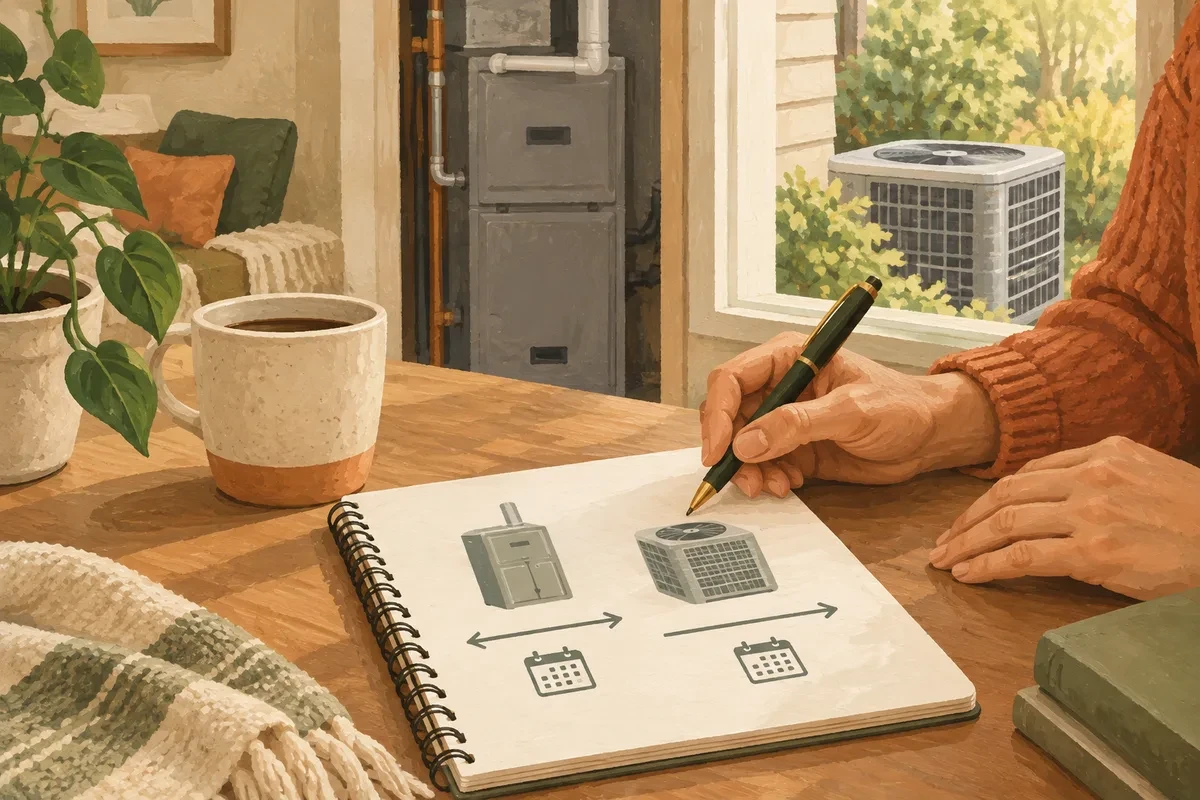
How Long Furnaces and ACs Really Last
If you own a home in Raleigh, you already know how hard your furnace and air conditioner work throughout the year. Between humid summers and chilly winter nights, these systems rarely get a break. That constant use naturally raises a common question: how long should this equipment actually last?
The answer depends on more than just the brand or age of your unit. How well it was installed, how often it's been serviced, and even the layout of your ductwork all play a role. Understanding the basics can help you plan ahead instead of getting caught off guard by a breakdown.
Typical Lifespans You Can Expect
Most furnaces last somewhere between fifteen and twenty years when they're properly maintained. Air conditioners tend to have a shorter run, often lasting twelve to fifteen years, partly because they work harder during long, humid stretches of weather. Heat pumps fall somewhere in between, since they operate year-round to handle both heating and cooling duties.
These numbers are general ranges, not fixed rules. Some systems keep running well past those marks, while others show signs of wear much sooner. Local climate matters too. In our area, the mix of high humidity and seasonal temperature swings can put extra strain on components compared to milder climates.
What Shortens the Life of Your System
A few habits and conditions tend to wear equipment out faster than expected. Skipping regular filter changes is one of the biggest culprits, since a clogged filter forces the system to work harder just to push air through. Neglected maintenance in general, like never having coils cleaned or components checked, allows small issues to grow into bigger ones.
Ductwork problems can also quietly shorten equipment life. When ducts are leaky, dirty, or poorly sized, your furnace or AC has to run longer to reach the same comfort level. That added strain adds up over the years. Oversized or undersized systems, often the result of a rushed installation, can face similar issues from constantly cycling on and off or running nonstop.
What Helps Equipment Last Longer
On the flip side, a few simple habits can help your system reach the upper end of its expected lifespan. Routine maintenance visits allow small adjustments and part replacements before they turn into major failures. Keeping vents unblocked and changing filters on a regular schedule also reduces daily strain on the system.
Clean ductwork matters more than many homeowners realize. Build-up of dust and debris inside the ducts can restrict airflow, making your equipment work harder than it needs to. Periodic duct cleaning helps keep air moving efficiently, which takes some of the load off your furnace or AC.
A correctly sized and properly installed system from the start also makes a real difference. Equipment that matches your home's size and layout runs more smoothly and experiences less wear over time compared to a mismatched setup.
Signs Your System May Be Aging
Even well-maintained equipment eventually shows signs that it's nearing the end of its service life. Rising energy bills without a clear explanation can point to a system that's losing efficiency. Unusual noises, like grinding, rattling, or repeated clicking, are also worth paying attention to.
Inconsistent temperatures from room to room, more frequent repairs, or a system that seems to run constantly without keeping up with the thermostat setting are all worth noting as well. If your furnace or AC is approaching the upper end of its typical lifespan and you're noticing any of these changes, it may be time to start thinking about your options.
If you're not sure whether your system is simply due for a repair or heading toward the end of its life, give us a call. Our team at Blue Heron Heating & Air is happy to talk through what you're noticing and help you figure out the best next step for your home.
Questions about your own situation? The team at Blue Heron Heating & Air is happy to help — call us at (919) 555-0164 or request an appointment.
This article is for general information only.